

Be Better Be You
Looking for advanced solutions for hair thinning, hair loss, dull skin, or visible signs of aging? Exosome treatment is an emerging area of regenerative medicine that is being explored for its potential applications in hair restoration and skin rejuvenation.
At Skin Smith by Dr Mahvish Aftab Khan, you can enquire about personalized treatment options for hair and skin concerns. Exosomes are microscopic extracellular vesicles involved in cell signaling, and researchers are investigating how they may influence biological processes associated with tissue repair and regeneration.
Whether you are exploring exosomes for hair, exosome treatment for skin, or an exosome facial for improved skin appearance, understanding the available evidence, product quality, and potential risks is essential before choosing a procedure.
Interested in exosome treatment in Islamabad? Contact Skin Smith by Dr Mahvish Aftab Khan to discuss your concerns and explore suitable treatment options with a qualified professional.
Exosomes are small extracellular vesicles released by cells. They carry biological materials, including proteins, lipids, and different types of RNA, that can participate in communication between cells.
In research, exosomes are being studied for their potential role in cell signaling, inflammation, tissue repair, and other biological processes. Some cosmetic and hair restoration products marketed as exosome treatments are intended to deliver biologically active materials to the skin or scalp.
Stem cell exosomes and mesenchymal stem cell exosomes are terms commonly used to describe vesicles associated with particular cell sources. However, products marketed under these names can differ considerably in their origin, composition, manufacturing, and quality.
Exosomes are not the same as stem cells, and their presence in a product does not automatically mean that the product can regenerate tissue or reverse hair loss.
Exosome therapy refers to experimental or emerging approaches that use extracellular vesicles or exosome-containing preparations for potential therapeutic or cosmetic purposes.
In aesthetic practice, exosome treatment is commonly marketed for concerns such as hair thinning, scalp health, skin texture, and signs of aging. Depending on the product and provider, treatment may involve topical application or other methods of administration.
However, exosome-based therapy is not a single standardized procedure. The source of the exosomes, product formulation, delivery method, and intended use all influence its potential effects and safety.
Many advertised applications remain investigational, and robust clinical evidence establishing their effectiveness and long-term safety is limited. A professional consultation should include a clear explanation of the evidence supporting the specific product and procedure being offered.
If you are searching for exosome treatment in Islamabad, exosome therapy near me, or an exosome clinic, it is important to understand what the treatment involves before making an appointment.
At Skin Smith by Dr Mahvish Aftab Khan, you can enquire about appropriate options for hair restoration and skin rejuvenation and discuss whether an exosome-based procedure is suitable for your needs.
People commonly explore exosome treatment for:
The suitability of exosome treatment depends on your medical history, the underlying cause of your concern, and the exact product and technique involved.
Before proceeding, ask about the product’s origin, composition, quality controls, intended use, evidence of benefit, and regulatory status.
Exosome therapy benefits are being investigated because extracellular vesicles participate in biological communication between cells. Researchers are studying whether specific exosome preparations may influence processes associated with inflammation, tissue repair, and hair follicle activity.
Potential areas of interest include:
These are areas of scientific investigation, not guaranteed clinical benefits. Evidence from laboratory experiments or early clinical studies does not establish that commercially marketed exosome treatments reliably regrow hair, reverse aging, or regenerate damaged tissue in humans.
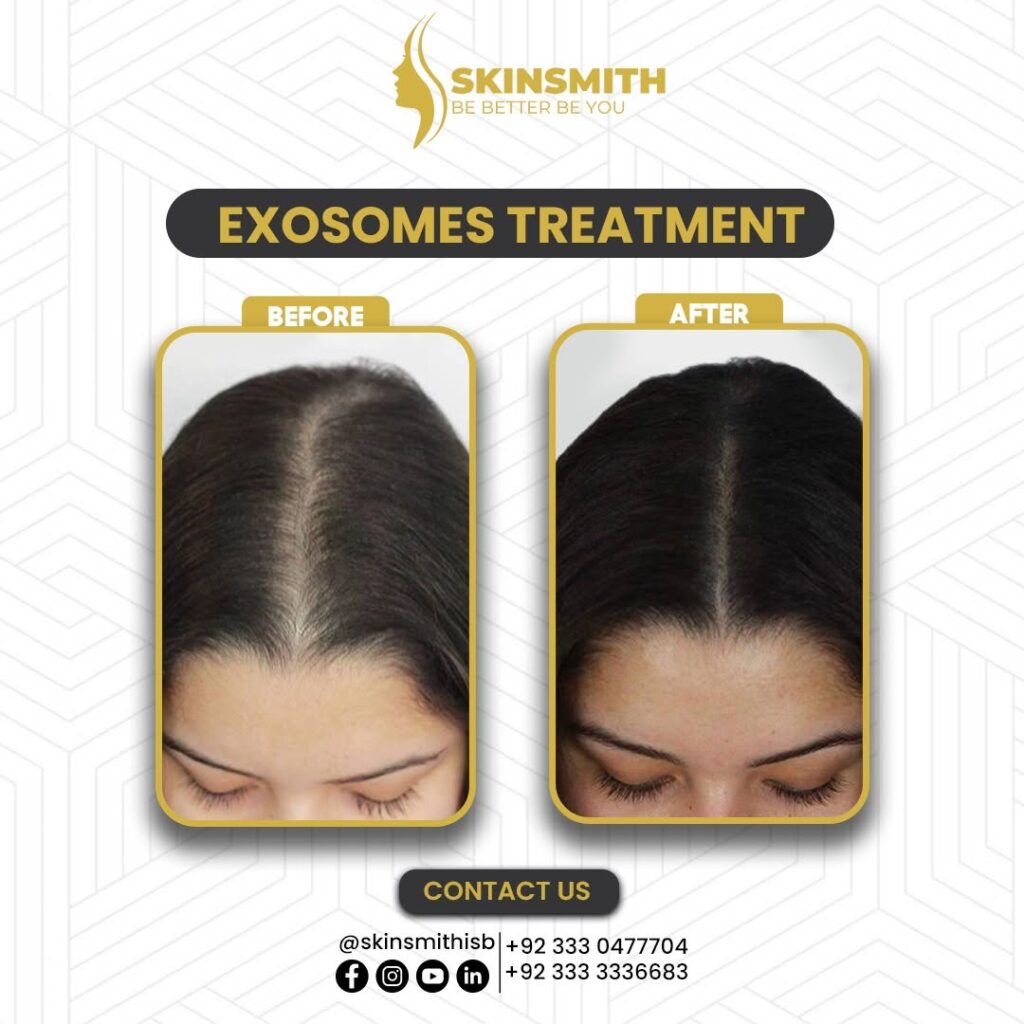
Exosomes for hair is a highly searched treatment category among people experiencing hair thinning, reduced hair density, or excessive shedding.
Hair loss can result from several causes, including androgenetic alopecia, hormonal changes, nutritional deficiencies, medical conditions, stress, and inflammatory scalp disorders. Identifying the underlying cause is important before selecting a treatment.
Exosome hair treatment is being investigated because certain extracellular vesicles may influence cell signaling pathways involved in hair follicle biology. However, clinical evidence is still developing, and exosome treatment is not an established first-line treatment for hair loss.
Exosome treatment for hair loss is marketed as an emerging option for supporting hair restoration. Researchers are investigating whether particular preparations may affect hair follicle cells and biological processes associated with the hair growth cycle.
Potential areas of investigation include:
These potential mechanisms do not guarantee visible hair growth. Results from commercially available treatments may differ significantly because products, protocols, and study quality vary.
If you are experiencing hair loss, a qualified dermatologist can help determine whether the cause is genetic, hormonal, nutritional, inflammatory, or related to another condition.
Exosome hair treatment refers to procedures marketed for scalp and hair restoration using exosome-containing products.
The procedure may be promoted to people with thinning hair or reduced hair density, but the method of administration and evidence supporting its use vary between products.
Before considering an exosome hair treatment, ask your provider:
Exosome treatment should not replace a proper assessment of the underlying cause of hair loss.
Exosomes for hair growth are being investigated for their potential influence on cellular communication within the hair follicle environment.
Some early research has explored whether specific preparations may influence biological pathways involved in the hair cycle. However, more high-quality clinical trials are needed to determine their effectiveness, optimal dosing, long-term safety, and appropriate patient selection.
There is currently no universally established exosome protocol that guarantees hair regrowth.
If you are searching for the best exosomes for hair growth in Pakistan, remember that a product’s marketing claims alone do not establish its quality or effectiveness.
Before choosing a product or clinic, consider:
A product described as premium, stem-cell-derived, or regenerative is not automatically superior to other products.
Exosomes for skin are being researched for their potential role in cell signaling, inflammation, and skin repair. In aesthetic settings, exosome skin treatment is marketed for improving the appearance of dull skin, uneven texture, and visible signs of aging.
Some products are applied topically, while others are promoted for use alongside procedures that affect the skin barrier. Their composition, intended use, and safety can differ substantially.
Research into exosomes and skin rejuvenation is promising in certain areas, but the evidence is not sufficient to guarantee that commercial exosome treatments will improve wrinkles, pigmentation, scars, or overall skin quality.
Exosome skin treatment is a broad term covering cosmetic procedures that use products containing or claiming to contain extracellular vesicles.
Depending on the formulation and method, these products may be marketed for:
The evidence for these outcomes varies, and a product’s suitability depends on its formulation and intended application.
Particular caution is necessary when a procedure involves microneedling, injections, or application to recently treated skin. Product purity, sterility, and appropriate use are essential considerations.
Exosomes treatment for face is marketed as an emerging option for people interested in skin rejuvenation and improved skin appearance.
Facial exosome treatments may be promoted alongside microneedling or other aesthetic procedures. However, combining exosomes with another procedure does not automatically establish the safety or effectiveness of the combination.
Researchers are exploring whether certain exosome preparations may influence:
These mechanisms remain areas of investigation, and outcomes depend on the preparation and clinical context.
If your main concerns are fine lines, acne scars, pigmentation, or dull skin, established treatments may have stronger supporting evidence. A qualified dermatologist can help compare the available options.
An exosome facial is a term commonly used for cosmetic treatments that incorporate exosome-containing skincare products into a facial or skin-rejuvenation procedure.
Unlike a conventional facial, which usually focuses on cleansing, exfoliation, and hydration, an exosome facial is marketed around the potential biological effects of extracellular vesicles.
However, the term “exosome facial” does not describe one standardized treatment. Some procedures involve topical products, while others combine products with techniques that may disrupt the skin barrier.
Before booking an exosome facial, clarify:
A professional assessment can help you decide whether an exosome-based facial is appropriate or whether a more established skin treatment would better address your concerns.
Exosome injections are marketed in some settings as a way to deliver exosome-containing preparations into tissues. However, injectable exosome products raise important safety and regulatory questions.
The safety of an injectable product depends on its source, manufacturing process, purity, sterility, composition, intended use, and clinical evidence. Products used for research are not automatically suitable for administration to patients.
Exosome injections should not be assumed to be safe, effective, or approved simply because they are offered by a clinic. Regulatory status varies by country and product, and many marketed regenerative applications remain unproven.
Before considering an exosome injection, discuss the potential risks and evidence with a qualified medical professional. Do not proceed without clear information about the product and its authorization for the intended use.
The use of intradermal injections of exosomes for hair rejuvenation carries minimal risk. Common side effects, such as redness and swelling, are transient and typically resolve quickly.
While exosome treatment effectiveness varies, it can produce noticeable improvements in a few weeks to months.
The effectiveness of exosome therapy varies, but noticeable results may be seen within a few weeks or months.
Exosome treatment effects may last for several months, depending on the patient and the particular treatment.
Exosome therapy varies in frequency based on the illness being treated, although they are typically administered several months apart.
Exosomes for hair loss can show results after just one session, however, several treatments over time may be necessary for the best results.
Depending on the treatment location and professional, exosome therapy might cost differently per session.