

Be Better Be You
Restore Facial Volume, Enhance Your Contours, and Look Refreshed Without SurgeryDo your cheeks look less defined than before? Have your smile lines become deeper, your jawline less defined, or your face started looking tired after weight loss? These changes can occur as facial fat shifts, collagen decreases, and skin elasticity changes with age.At SkinSmith by Dr. Mahvish Aftab Khan, non-surgical facelift treatment with dermal fillers offers a personalized approach to restoring facial volume, enhancing contours, and creating a fresher, more balanced appearance without traditional facelift surgery.A non-surgical facelift, also known as a liquid facelift, uses strategically placed injectable treatments to address selected signs of facial aging. Depending on your facial structure and concerns, treatment may involve cheek fillers, chin fillers, jawline fillers, temple fillers, or fillers for specific facial lines.If you are looking for a non-surgical facelift in Islamabad or Rawalpindi, the first step is understanding what is causing the changes in your face and which treatment options are appropriate for you.At SkinSmith by Dr. Mahvish Aftab Khan, the goal is to create a personalized treatment plan that respects your natural facial proportions and aesthetic preferences.Book your consultation to explore non-surgical facelift fillers in Islamabad and discover which options may suit your facial features.
A non-surgical facelift, also known as a liquid facelift or injectable facelift, is a cosmetic procedure aimed at rejuvenating the face without the need for invasive surgery. Instead of making incisions and lifting facial tissues, non-surgical facelifts utilize injectable fillers, muscle relaxants, and other techniques to restore volume, reduce wrinkles, and improve overall facial appearance. This approach offers a less invasive alternative to traditional facelift surgery, with fewer risks and a quicker recovery time.
A non-surgical facelift is a cosmetic treatment approach designed to improve selected signs of facial aging without traditional surgical lifting.
One common option is a liquid facelift, which uses dermal fillers to restore lost volume, enhance facial contours, and soften certain facial lines. Depending on the patient’s needs, other non-surgical treatments may sometimes be considered as part of a broader facial rejuvenation plan.
Unlike a surgical facelift, which repositions underlying tissues and removes or tightens excess skin, a facelift without surgery primarily focuses on volume restoration and contour enhancement. It cannot reproduce all the results of surgery, particularly when significant loose skin is present.
A liquid facelift with fillers involves injecting carefully selected dermal fillers into specific areas of the face to improve proportions and support a more refreshed appearance.
Depending on your assessment, treatment may focus on:
The treatment plan is based on your facial anatomy, skin condition, and desired outcome rather than simply filling every visible line.
A liquid facelift is not a substitute for surgical lifting. It is most appropriate when volume loss, contour changes, or selected facial lines are important contributors to the concerns being treated
A non-invasive facelift treatment may help improve facial balance without the incisions and recovery associated with traditional facelift surgery.
Age-related changes and significant weight loss can make the cheeks, temples, and other facial areas appear hollow. Dermal fillers may restore selected areas of lost volume and create a more balanced appearance.
Cheek fillers can improve cheekbone definition and restore selected areas of midface volume. In appropriate patients, this may also improve the overall balance of the lower face.
Jawline fillers and chin fillers can enhance definition and proportions in suitable candidates. The result depends on the existing bone structure, soft tissue, and amount of volume loss.
Facelift with dermal fillers may help soften certain smile lines, nasolabial folds, and marionette lines when volume loss contributes to their appearance.
A liquid facelift does not involve traditional facelift incisions. Recovery is generally shorter than surgical recovery, although temporary swelling, bruising, tenderness, and other side effects can occur.
Treatment can be planned around your natural facial structure and personal goals, whether you want subtle cheek enhancement, better jawline definition, or improvement in selected areas of facial volume loss.
The aim is not to make every face look the same. It is to achieve an appropriate balance between facial features while preserving natural expression.
A variety of noninvasive techniques are available, addressing anything from fine lines, deep creases, lax skin, thinning lips, sunken cheeks, large pores, acne scarring, and the loss of facial volume.
In Islamabad, non-surgical facelift procedures are commonly performed using various techniques, including:
Does your face look saggy and tired even when you feel well-rested? Have your cheeks started to look flatter, or has your lower face lost its youthful contour?
Facial aging can involve changes in fat distribution, supporting tissues, bone structure, and skin elasticity. These changes can contribute to sagging cheeks, deeper folds, and a less defined jawline.
The right sagging face treatment depends on what is causing the change.
For some patients, carefully placed dermal fillers can restore volume in selected areas and improve facial proportions. Cheek fillers may help support a flatter-looking midface, while chin or jawline fillers may improve definition in appropriate candidates.
However, fillers do not directly remove excess skin or reliably tighten significantly loose facial tissue.
A non-surgical facelift consultation should distinguish between volume loss, skin laxity, and changes in underlying facial structure before recommending treatment.
Cheek fillers for lifting are commonly discussed as part of a liquid facelift because the cheeks contribute to midface contour and facial proportions.
In selected patients, restoring cheek volume may improve the appearance of flattened cheeks and soften certain folds. The effect depends on anatomy and the placement and amount of filler used.
Cheek fillers are not a true surgical lift, and excessive volume can create an unnatural appearance. Conservative treatment planning is important for balanced results.
If you are searching for cheek filler in Islamabad, an assessment can help determine whether cheek enhancement is suitable for your facial structure.
Jowls develop when tissues along the lower face become less defined and descend around the jawline. Aging, genetics, facial structure, and changes in skin elasticity can all contribute.
If you are wondering how to get rid of jowls without surgery, the answer depends on the degree of sagging and whether volume loss or excess skin is the main concern.
Jawline fillers may improve definition in selected patients by enhancing the contour of the jaw and chin. In some cases, strategic volume restoration can improve the visual balance of the lower face.
However, fillers do not remove jowls or tighten substantial excess skin. Adding too much filler to an already heavy lower face may make it appear wider or heavier.
For this reason, jowls treatment without surgery requires careful assessment rather than simply injecting the jawline.
Depending on your needs, your practitioner may discuss:
If you are considering sagging jawline treatment in Islamabad or Rawalpindi, a personalized assessment can help clarify what fillers can realistically achieve.
A face that looks thinner or more hollow than before may reflect age-related volume loss, genetics, or significant weight loss.
Hollow cheeks and sunken temples can change facial proportions and make the face appear more tired or older.
Facial volume loss treatment may involve dermal fillers placed in selected areas to restore balance and soften hollow contours.
Depending on your facial anatomy, a treatment plan may consider:
The objective is to restore proportion rather than simply make the face fuller.
If your face looks older after losing weight, it is important to assess whether the change is due to volume loss, loose skin, or both. Fillers may help with selected volume deficits but cannot correct significant skin excess.
Nasolabial folds are the lines that extend from the sides of the nose toward the corners of the mouth. They become more noticeable in some people as facial volume distribution and skin elasticity change.
If your smile lines are getting deeper, dermal fillers may be one option, depending on the underlying cause.
Nasolabial fold fillers may soften certain folds, but directly filling the lines is not always the best approach.
For some patients, restoring selected cheek volume may improve the appearance of the midface and reduce the prominence of the folds. For others, a targeted approach may be appropriate.
The right treatment depends on the depth of the folds, facial anatomy, skin quality, and how the face moves during expression.
If you are looking for nasolabial folds treatment in Islamabad, your consultation should focus on improving the overall facial balance rather than treating lines in isolation.
Marionette lines extend from the corners of the mouth toward the chin. When prominent, they can create the appearance of a downturned mouth or a tired expression.
These lines may become more visible because of age-related volume loss, changes in skin support, and the natural structure of the lower face.
Marionette lines treatment may involve selected dermal fillers when volume loss contributes to the lines. Treatment planning may also consider chin and lower-face proportions.
However, filling the lines alone may not be suitable for everyone, especially when there is significant tissue descent or excess volume in the lower face.
A personalized assessment helps determine whether marionette line fillers, other treatments, or a combination approach is more appropriate.
Facial aging is not caused by wrinkles alone. Changes in fat compartments, bone structure, skin elasticity, and supporting tissues can alter the shape of the face over time.
Age-related volume loss may lead to hollow cheeks, deeper folds, flatter contours, and a less defined transition between facial areas.
A liquid facelift with fillers may help restore selected areas of volume and improve facial proportions without traditional surgery.
Depending on your assessment, facial contouring fillers may be considered for:
Not every area needs treatment, and more filler does not necessarily produce a younger appearance. A conservative plan that respects natural facial proportions is important.
If you are exploring facial rejuvenation without surgery, the most appropriate treatment should be selected according to the cause of the changes you are noticing.
Dermal fillers are injectable products used to add volume or improve the contour of selected facial areas. Different fillers have different properties, and not every product is suitable for every area.
Hyaluronic acid fillers are commonly used for cheek enhancement, selected facial folds, chin contouring, and other appropriate indications.
Many hyaluronic acid fillers are temporary, and some can be dissolved using hyaluronidase when medically indicated. Dissolving filler is not a guarantee that every complication can be reversed.
The choice of filler depends on the treatment area, desired effect, facial anatomy, product characteristics, and clinical assessment.
Your provider should explain the product being used, the expected duration of results, the possible risks, and the aftercare requirements before treatment.
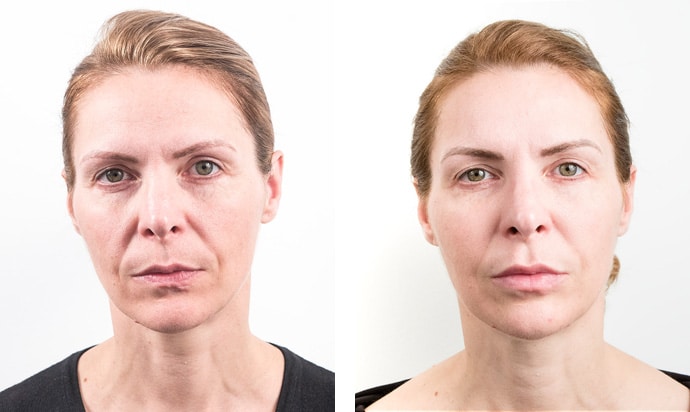

To maintain the results of the best non-surgical facelift, it’s essential to follow these maintenance tips:
By adhering to these maintenance practices and collaborating closely with Dr. Mahvish, you can prolong the results of your non-surgical facelift and enjoy a rejuvenated, youthful appearance for years to come.
No matter the treatment, the aging process will continue. Working with a board-certified dermatologist like Dr. Mahvish means that each nonsurgical facelift can be custom-tailored for your skin’s evolving needs. Eventually, if the noninvasive techniques can no longer achieve the desired results, a surgical procedure can be considered.
You may be a candidate for a non-surgical facelift with fillers if you are concerned about:
The suitability of dermal fillers depends on your medical history, skin condition, facial anatomy, previous treatments, and expectations.
If your main concern is substantial loose skin, pronounced jowls, or significant facial sagging, fillers alone may not achieve the improvement you want. A consultation can help determine whether another treatment or surgical assessment would be more appropriate.
There are several compelling reasons why individuals may opt for a non-surgical facelift over a surgical facelift:
Choosing us for your non-surgical facelift ensures that you receive expert care, personalized attention, and exceptional results, allowing you to rejuvenate your appearance and boost your confidence with peace of mind.
A liquid facelift and a surgical facelift address facial aging in different ways.
Surgical facelift:
Neither option is universally best. The appropriate choice depends on your anatomy, the degree of aging, your goals, and your willingness to undergo surgery.
Your practitioner discusses your concerns, medical history, previous cosmetic treatments, and desired outcome.
Facial proportions, volume distribution, skin condition, and areas of concern are assessed to determine whether fillers are suitable.
The practitioner explains the proposed treatment areas, product choice, anticipated results, costs, limitations, and potential complications.
If appropriate, the selected filler is injected into planned areas using a suitable technique. Treatment time depends on the number of areas and complexity of the procedure.
You receive instructions on managing temporary swelling or bruising and information about symptoms that require urgent assessment.
The duration of a non-surgical facelift depends on the filler product, the area treated, the amount used, your metabolism, and individual factors.
Many hyaluronic acid fillers last approximately six to eighteen months, although duration varies considerably by product and treatment area. Some results may last for a shorter or longer period.
As fillers gradually break down, the enhancement diminishes. Maintenance treatment may be an option for some patients, but it should be based on clinical assessment rather than a fixed schedule.
Dermal fillers are medical treatments and can cause side effects or complications.
Common temporary effects include swelling, bruising, tenderness, redness, and mild asymmetry. Less common but serious complications include infection, nodules, and vascular occlusion, which can cause tissue damage and, rarely, vision loss.
Treatment around the nose, forehead, glabella, and other facial areas with blood vessels connected to the eye carries particular concern for vascular complications.
Choose an appropriately qualified and experienced medical practitioner who understands facial anatomy and can recognize and manage complications. Seek emergency medical attention for vision changes, severe or increasing pain, or unusual skin discoloration after filler treatment.
A non-surgical facelift is a cosmetic treatment approach designed to improve selected signs of facial aging without traditional surgery. A liquid facelift commonly uses dermal fillers to restore lost volume, enhance cheek or jawline contours, and soften certain facial lines. It cannot remove substantial excess skin or achieve the same tissue repositioning as surgical facelift surgery.
The most effective non-surgical facelift depends on the cause of your concerns. Dermal fillers may help when facial volume loss or contour changes are the main issues. Other treatments may be more appropriate when skin laxity, dynamic wrinkles, or texture changes are the primary concern. A qualified practitioner can recommend a treatment plan based on your facial anatomy and goals.
A liquid facelift is a non-surgical facial rejuvenation approach that uses injectable treatments, most commonly dermal fillers, to restore selected areas of facial volume and improve contours. It may involve cheek, chin, jawline, or other fillers depending on the patient's needs. Results are temporary, and the procedure does not replace surgical lifting for significant loose skin.
Dermal fillers primarily restore volume and improve facial contours; they do not directly tighten significant loose skin. In selected patients, restoring cheek volume or enhancing the jawline may create a more lifted-looking appearance. When skin laxity is the main concern, other non-surgical treatments or surgical assessment may be more appropriate.
When choosing a dermatologist or medical practitioner for a non-surgical facelift in Islamabad, look for verified qualifications, experience with facial anatomy and dermal fillers, authentic products, and the ability to recognize and manage complications. You can contact SkinSmith by Dr. Mahvish Aftab Khan to enquire about consultation availability, practitioner credentials, and suitable treatment options for your concerns.
Ultimately, the choice between a facelift and filler depends on individual preferences, aesthetic goals, and the extent of aging concerns. Consulting with a qualified cosmetic practitioner (Dr. Mahvish Aftab Khan) can help determine the most suitable treatment approach based on your unique needs and expectations.s
The right treatment depends on whether your face looks sagging because of volume loss, skin laxity, or changes in facial structure. Dermal fillers may improve selected areas of volume loss and contour, while other procedures may be considered for skin laxity. Significant excess skin may require surgical assessment. A personalized consultation can help identify the most appropriate approach.
Jowls may be related to skin laxity, changes in facial support, and age-related tissue descent. In selected cases, jawline or chin fillers may improve facial definition, but they cannot remove excess skin or reliably lift pronounced jowls. The best approach depends on the degree of sagging and your facial anatomy.